Redondo-beach Hair Replacement

Not yet a member? Join Us

Find a Board Certified Surgeon in Redondo Beach
An Interview with Dr. Sanusi H. Umar on Hair Transplant

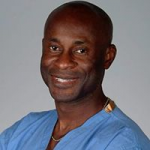
Dr. Sanusi H Umar, MD is a board certified Dermatologist practicing in Redondo Beach California. He is a fellow of the American Academy of Dermatology. Here the Doctor has answered some of the common questions bizymoms visitors have about Hair transplant.


Q. Please explain the primary procedures performed by your practice.


A. Hair restoration using head and body hair


Zerona laser for body slimming (non surgical treatment)


Laser treatment for skin rejuvenation and reversal of skin aging


Laser treatment of birth marks


Laser hair reduction


Laser treatment of leg veins


Laser treatment of acne scars and non acne scars


Sclerotherapy for leg veins


Tissue augmentation with body fat, Radiesse, Restylane, Juvederm, Hydrelle


Zerona laser for slimming


Botox


Silhouette facelift


Photodynamic treatment of acne and pre cancers.


All medical and surgical dermatology


Q. Why is it important to know about the hair transplant procedures available?


A. Broadly there are 2 major categories of hair restoration methods to choose from:


 1.  Follicular Unit Strip Surgery (FUSS) group: aka Follicular Unit Hair       Transplant (FUHT), Follicular Unit Transplant (FUT). In this method, a narrow strip   of hair bearing flesh is cut from the back and sides of the head. Individual hair follicles on the strip of flesh are harvested with the aid of microscopes and transplanted into pre-made slits on the bald areas. 


A permanent linear scar would necessarily result from this procedure. Thus it should be used only in patients that would never plan on keeping a short hair cut, since doing so would expose the scar. Also because only the hair in the middle of the back and sides of the head can be utilized, the quality of hair that can be derived is limited. For instance if transplanting the eyebrows, the hair derived from strip surgery areas tend to be too thick and grow too fast for a natural looking eyebrow. The result is often a thick wavy looking eyebrow that has to be trimmed very frequently. A natural eyebrow consists of very thin slow growing hair. Finally, the linear scarring makes it unwise a technique to deploy when harvesting hair from exposed areas like the beard. Advantages of this procedure include lower cost and less surgery time.


ii. Follicular Unit Extraction (FUE) group: This group of techniques broadly entails the use of tubular cutting devices that are used in scoring the hair follicle directly from its location. The scoring would partially or completely free the hair follicle from it surrounding attachments. The scored follicle is then removed at this stage with or without the aid of further dissection. Subsequently the follicle is transplanted into premade slits in the bald area in a fashion similar that of FUSS.


FUE results in tiny often cosmetically insignificant scars at the site of each extraction. The patient is thus able to keep shorter hair styles including in most instances crew cuts. By this method, the surgeon has more hair variety to choose from. For instance Nape hair is finer and slow growing and can be harvested safely by FUE and transplanted to the eyebrows for a more natural result. Also, because of cosmetically insignificant scarring, FUE methods can be used to harness hair from the beard and other aspects of the body. This expansion of the donor supply makes it possible to restore even severely bald individuals in selected cases, a fit not possible with FUSS method which restricts our donor supply t a narrow part of the back and sides of the head. Also, patients that have lost their head donor supply either from prior surgeries or burn accidents can also be restored in selected cases. FUE is however has a higher learning curve, is more expensive, and takes longer to perform.


Q. Tell us more about the Body Hair Transplantation procedure

A. Body hair transplantation (BHT) is also called body to head hair transplantation and refers to the transplantation of body and beard hair to the balding area of the scalp. It is currently performed using FUE type techniques. How does BHT differ from traditional hair transplants? Traditional transplants require redistribution of permanent hair from the back and sides of the head; this limits the donor supply to 5,000-7,000 hair follicles. In a significantly-bald individual, only one tenth of what has been lost can be replaced using this source. The result is often thin, and cosmetically unappealing. BHT potentially adds the entire body and beard -hair supply to the donor resource allowing even severely-bald individuals to aim for a fuller and better restoration. Because body hair differs from head hair in its characteristics (eg length, thickness, and curliness) it potential is best realized when used in combination with head hair for better camouflaging effect.


Certain body hair (eg. leg hair) is thinner and looks better in the hair line and eyebrow than transplanted head hair. In the hairline, leg hair in combination with head hair could produce a more natural, feathered look that cannot be attained by using head hair alone.


There are also more variations in the character of body hair. Therefore, some body hairs are best suited for specific purposes such as eyebrow or eyelash transplantations.


Not everyone is a good candidate for BHT. Some people including most women do not have the appropriate amount of body hair, while others have unsuitable body hair characteristics.


The procedure is permanent and results are realized within approximately 18 months; follow-up is minimal and patients are typically released after one to two years.


The BHT procedure is taxing with a high-skill level requirement and steep learning curve; a single-patient procedure often takes several days to complete.


Q. Are the hair transplant procedures painful?


A. Hair transplantation is an outpatient office procedure that is performed under local anesthesia with the patient fully awake. Local anesthesia is used to numb the surgical sites resulting in a painless procedure. In FUE and BHT which are minimally invasive, little or no need for over the counter pain medications exists..


Q. How many hairs are transplanted per session?

A. Transplanted For both FUSS and FUE, 1500 – 2000 grafts can be done in a single day. Some clinics are capable of doing up to 5000 grafts in 1 day using the FUSS method. With FUE and BHT, procedures are done in series of consecutive days. Thus 8000 grafts can be accomplished by FUE and BHT over 4-5 consecutive days. Some patients have undergone up to 15,000 graft transplanted by FUE and BHT over the course 2 weeks 


Q. What can be expected after hair restoration surgery?


A. Hair restoration can give the appearance of a natural full head of hair. The hair is your own natural hair to be handled and groomed as wished. Even diseased conditions can be restored 


Q. Can the clients wear their hair short 

A. If the follicular Unit Method is used, a short hair cut is possible.

Button size 160x157
FEATURED INTERVIEWS
Powered by
Bizymoms
Copy and paste the below widget code to show this button on your web page.